The Scope of ISA-95
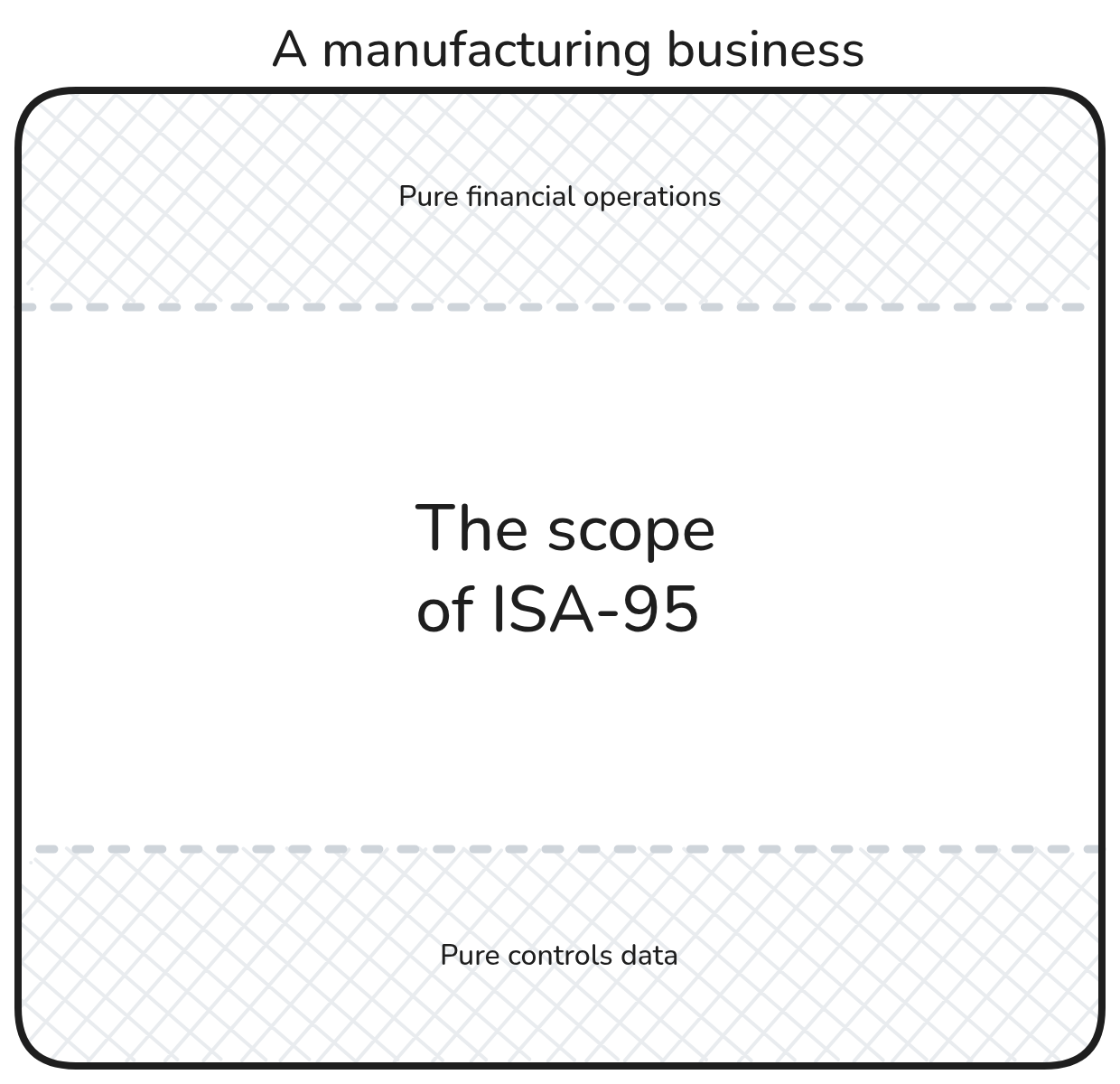
ISA-95 covers everything that happens in a manufacturing operation between business planning and pure process controls. Crudely speaking, we can say that ISA-95 is not concerned with money flows or programming SCADA and PLC systems, but everything between these two responsibilities is fair game. That covers a lot of ground.
The activities
ISA-95 part 3 defines eight activities that comprise manufacturing operations. These eight activities fall into four phases:
Reference. The resource and work definition models provide the foundational reference data for systems to schedule, execute, and analyze manufacturing production.
Planning. Detailed scheduling plans production at a high-level; dispatching plans production at a faster pace and in more granular detail.
Execution. These models record information about production as it executes.
Analysis. Finally, after production is recorded, your systems can use the recorded data to track goods and measure performance.
Notice that these four phases all inform each other. The reference data about capabilities and processes informs how precisely the business can plan production. The plant executes production according to this plan, and the analysis phases compares how well execution did according to its planned ideal―and this ideal is often encoded in the reference data.
ISA-95 provides a comprehensive data model for all aspects of the operation, which also makes it the golden data model for AI and algorithmic analysis.
Manufacturing categories
ISA-95 is explicit about the different categories of manufacturing management. These categories are:
- Production
- Maintenance
- Quality
- Inventory
All the activities from the preceding section apply to these categories. Just as production has a lifecycle from definitions to post-execution analysis, so do quality, maintenance, and inventory. ISA-95 covers all of this.
One model: vast connections
One model covers all phases of execution and all categories of manufacturing operations: this is exciting. If you are a manufacturing veteran, you no doubt can think back to projects and time that have been lost through poor systems integration, ill-defined models, and general miscommunication about how a manufacturing process works. It doesn’t need to be that way.